
Quote template for sole traders: what to include, and what to write about VAT

As a sole trader you give the same kind of quote as a limited company, you just need to write a few things differently: your name, your tax number, and how you handle VAT. Below is a filled-in example and the points to watch for.
What should be in the header?
- Your name and the "e.v." (sole trader) suffix, for example "János Szabó e.v.". If you have a registered trading name (e.g. "Szabó Electrical"), include that too, but your own name should always be on it.
- Registered or business address, as it appears in the register.
- Tax number, your sole trader tax number, in the 8-1-2 format (e.g. 12345678-1-42). The middle digit is 1 if you're VAT-exempt, 2 if you're VAT-registered. This also tells the client whether VAT will be added to the price.
- Contact details, phone, email. Your website, if you have one.
- Registration number, not mandatory, but larger, corporate clients like to see it.
What should you write about VAT?
This is where sole traders' quotes are most often misunderstood.
If you're VAT-exempt (in 2026 this can be chosen up to HUF 20 million / roughly EUR 50,000 in annual revenue, rising to 22 million from 2027 and 24 million from 2028), there's no net and gross, just a single total. Write under the total: "I am a VAT-exempt small business, this amount does not include VAT and I will not be charging any." Without this, the client might think another 27% is coming, and see you as more expensive than you are.
If you're VAT-registered, show the net amount, the VAT amount and the gross total separately. A private client cares about the gross figure, a corporate client about the net. If both are there, there's no dispute.
If you take on construction work for a VAT-registered corporate client, reverse-charge VAT may apply. We covered this in detail in Labour, materials and VAT in a quote.
Filled-in example: self-employed landscaper
Supplier: János Szabó e.v. · 2100 Gödöllő, Példa utca 8. · Tax number: 12345678-1-13 · +36 30 123 4567 Client: Andrea Kiss · 2100 Gödöllő, Minta köz 3. Quote number: 2026/31 · Date: 21 September 2026 · Valid until: 5 October 2026
Job: Laying turf on approx. 120 m² of back garden, including soil preparation, based on the on-site survey.
| # | Item | Qty | Unit | Unit price | Total |
|---|---|---|---|---|---|
| 1 | Clearing weeds, raking the area | 120 | m² | HUF 900 | HUF 108,000 |
| 2 | Spreading topsoil (5 cm) and compacting | 120 | m² | HUF 1,400 | HUF 168,000 |
| 3 | Turf, delivered | 130 | m² | HUF 1,900 | HUF 247,000 |
| 4 | Laying turf, rolling, first watering | 120 | m² | HUF 1,200 | HUF 144,000 |
| Total payable | HUF 667,000 |
(roughly EUR 1,670 at current exchange rates)
I am a VAT-exempt small business, this amount does not include VAT and I will not be charging any.
Terms: The price includes materials and labour. Excludes installation of an irrigation system. Start within 10 days of acceptance, weather permitting. Payment: cost of materials (HUF 247,000) on delivery day, the rest on handover. 30-day warranty on the turf taking root, provided it's watered regularly.
Three things sole traders often get wrong
They don't state a validity period. Without a date, under the Hungarian Civil Code you remain bound to your quote for as long as a response could "reasonably" be expected. This is open to argument, so always write a specific date. More on this: How long is a quote valid?
They ask for a deposit but don't know what to issue for it. After a quote is accepted, a message saying "please transfer the money" isn't enough for a deposit: you can send a payment request (a pro forma, in Hungarian "díjbekérő"), and once the deposit arrives you must issue an invoice for it. We wrote about this here: Quote, payment request, deposit invoice, invoice.
They write it up in the evening, two days later. A sole trader is on their own: they do the survey, the work and the quoting. That's why most quotes don't go out on the day of the survey, but whenever there's finally time, and by then someone else has often taken the job.
If you don't want to start every quote from scratch
You can copy the example above into Word and rewrite it for every client. Ajánlatra shortens this: you enter your name, tax number, VAT-exemption note and common items once, then you just say out loud what the job is and how much it costs, and the finished, branded quote can go to the client by email, SMS or QR code within seconds.
The free plan allows 3 quotes a month, no card required, and you can try it on the homepage without registering. If you send more, the Pro plan is unlimited.
Frequently asked questions
Do I need to put my tax number on the quote as a sole trader?
It's not mandatory on a quote, only on an invoice. It's still worth including, as it shows the client they're dealing with a legitimate business, and you'll need it for the invoice anyway once the quote is accepted.
How do I indicate that I'm VAT-exempt?
With one sentence under the total: 'As a VAT-exempt small business, I do not charge VAT, this amount is final.' That way the client won't expect a net-gross breakdown, and won't think another 27% is coming.
What's the difference between a sole trader's quote and a limited company's?
Nothing in content. The difference is in the header: a sole trader uses their own name with the "e.v." (sole trader) suffix (or their registered trading name), and the tax number tied to an individual. The legal effect is the same: an accepted quote creates a contract.
Can I give a quote verbally?
You can, but it's risky. A price you state over the phone is also a quote the client can accept. If it later turns out there's more work involved, it's hard to prove what you committed to. A written quote protects you too.
Related articles
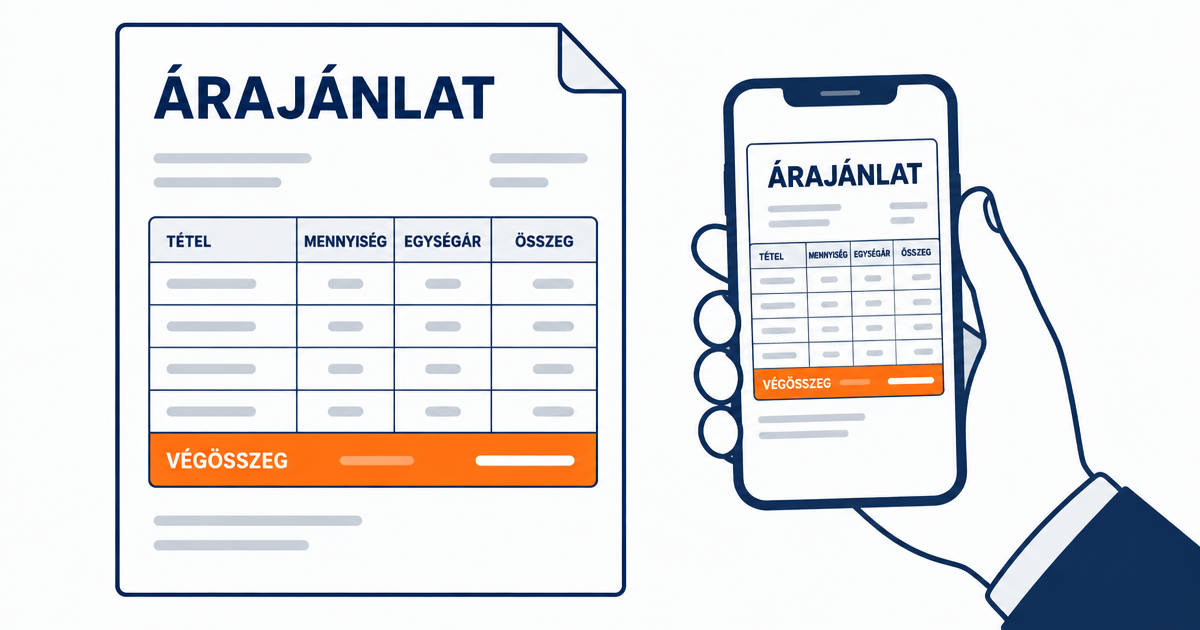
Quote template 2026: a filled-in example and downloadable template (Word, Excel, PDF)
Free quote template for Hungarian tradespeople: a filled-in example with line items, downloadable Word, Excel and PDF templates, and the most common mistakes tradespeople make.
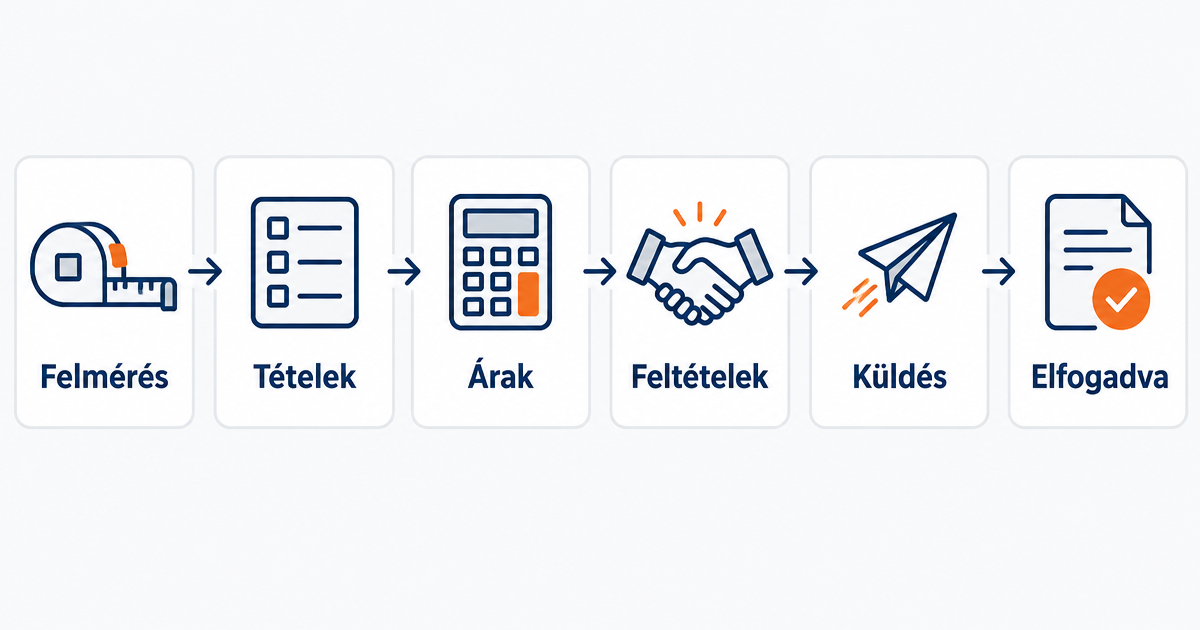
How do I write a quote? Step by step, with a filled-in example
Writing a quote step by step: what it should include, what's mandatory, how to price items, what to put in the terms and the validity period. With a filled-in example.
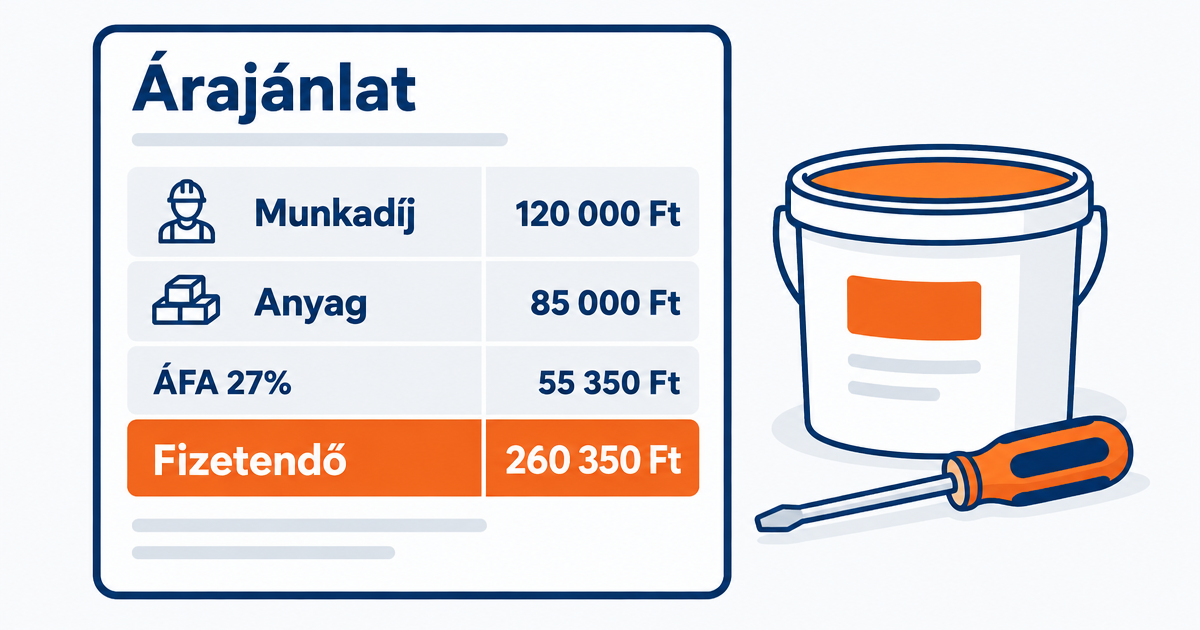
Labour, materials and VAT in a quote: how to break it down so there's no dispute
How to show labour and materials costs in a quote, when to list them separately, and how VAT, Hungarian small business VAT exemption and reverse-charge VAT fit in. With an example.
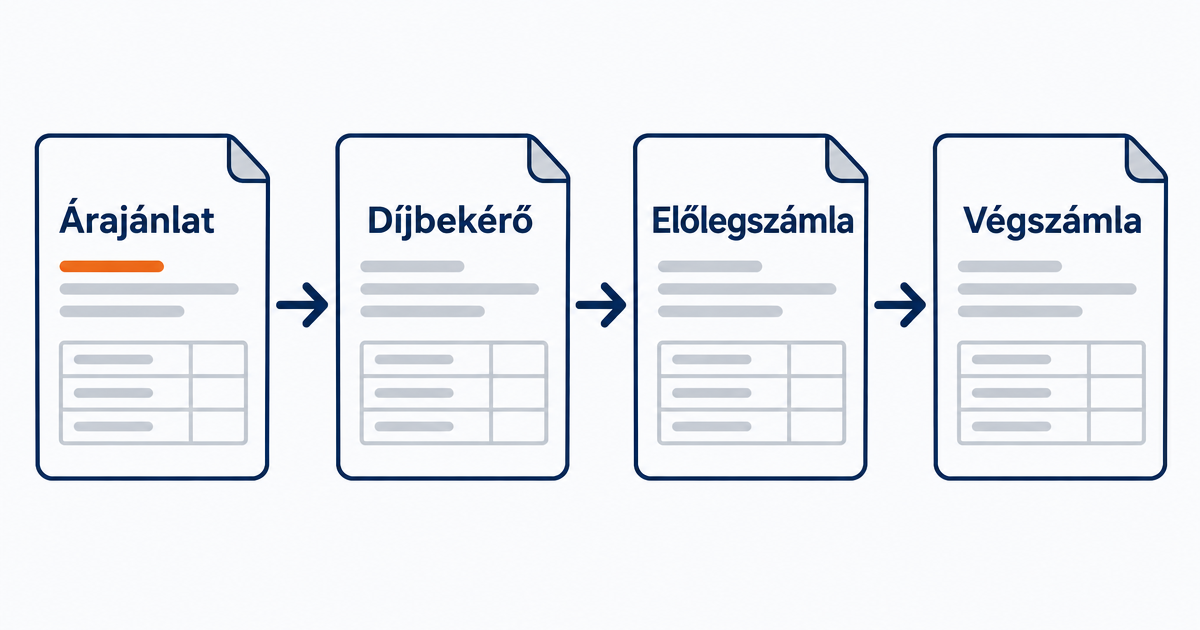
Quote, payment request, deposit invoice, final invoice: what's the difference, and when do you need which?
Quote, payment request (pro forma), deposit invoice and final invoice: which is needed when, which carries VAT and Hungarian tax authority obligations, and in what order to issue them. Simply explained, for tradespeople.