
How long is a quote valid? Being bound by an offer, explained simply for tradespeople
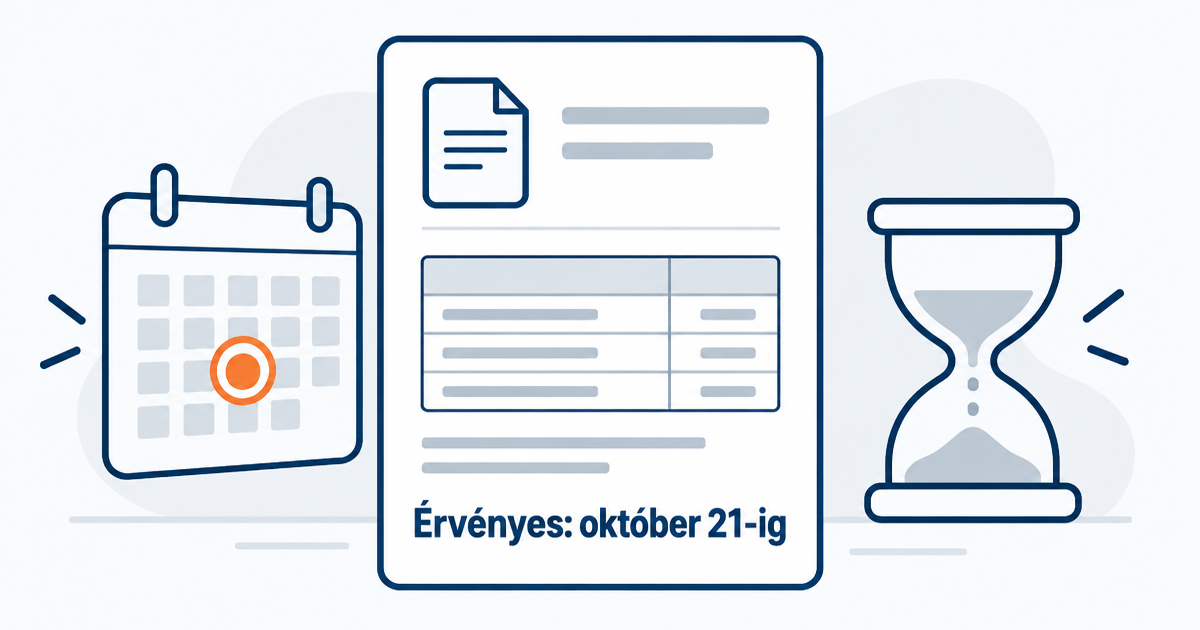
When a tradesperson sends a quote, they rarely think of it as making a legal statement. But that's exactly what it is: accepting a quote creates a contract, and for as long as the quote is valid, you're bound by it. This article covers how long that commitment lasts, when you can withdraw a quote, and how to write it so you don't end up in an awkward position.
What does it mean to be bound by an offer?
Under Section 6:64 of the Hungarian Civil Code, a person who makes a clear statement aimed at concluding a contract, covering the essential matters, remains bound by it. In plain terms: if you write that painting the living room costs HUF 250,000, and the client says fine, a contract has been formed for HUF 250,000. You can't later say that the paint got more expensive in the meantime.
This commitment doesn't last forever. Either you decide how long, or the law decides for you.
If you stated a validity period
This is the simple case. If the quote says "valid until 21 October 2026", your commitment lasts until midnight on 21 October. On 22 October, the client can only ask you to honour the price; it's up to you whether you do, or issue a new quote.
So the most important advice in this article: always put a specific date on it. Not "valid for 30 days", because then is it counted from the date of the quote or from when it was received? A date is unambiguous. For where to put this on the quote, see How do I write a quote? and the filled-in quote example.
If you didn't state one
In that case, under Section 6:65 of the Hungarian Civil Code, the binding commitment ends:
- between parties present together (in person, or by phone, where the other party hears it immediately) if the client doesn't accept without delay, so essentially immediately;
- between parties not present together (email, SMS, letter) once the time has passed within which the offeror could reasonably have expected a response to arrive, taking into account the nature of the service and the manner of the offer;
- also if the client rejects the offer.
The rule for parties not present together is the awkward one: what counts as "reasonable" for a tiling quote sent by email? Three days? Two weeks? In a dispute, a court would weigh this up. If you've put a date on it, this question never arises.
Can you withdraw a quote?
Yes, but there's little room to manoeuvre.
A quote can be withdrawn only until the client has sent their acceptance. If you gave the quote in writing, the withdrawal is only valid in writing too, a phone call isn't enough. And there are two cases where an offer that has already become effective cannot be withdrawn at all: if the quote states it's irrevocable, or if you gave a deadline for acceptance.
The latter is surprising but logical: if you wrote "valid until 21 October", you committed to holding that price until then, and the client is entitled to rely on it. If you later realise you miscalculated, there's one thing you can do: raise it politely and hope the client doesn't insist on the old price. Legally, they can.
If you don't want to be bound
Sometimes you just want to give an indicative price before going out to survey the job. In that case, state clearly: "Indicative price only, given without binding commitment. The final quote will be provided after an on-site survey." Such a statement doesn't count as an offer under Hungarian civil law, so the client "accepting" it doesn't create a contract.
The reverse is also true: if you state a figure over the phone and the client says that's fine, that was indeed an offer and acceptance. So it's worth saying on the phone too, "roughly that much, but I'll send you the exact quote in writing".
How long should validity be in practice?
There's no fixed rule, but common sense helps:
- Labour-type services (painting, cleaning, consulting): 30 days is comfortable.
- Materials-heavy work (tiling, mechanical, air conditioning): 15 to 30 days, plus a materials price clause (example in the construction quote template): "Material prices may change according to the list price valid on the day of purchase."
- Seasonal work (garden, roofing): alongside the validity period, also state the start window you're committing to, otherwise the client might turn up in late August with a quote from June.
If the client gets in touch after the expiry date, don't automatically work at the old price. Legally, "accepting" an expired quote is now their offer to you, which you can resend at a revised price.
Extension and amendment
If the client asks, you can extend the validity: send a short written message ("I'm extending quote no. AJ-2026-0042 until 31 October with unchanged content"). If you change anything in the meantime (price, item, term), that's a new quote with a new number. Don't rewrite the old one, because later you won't be able to prove which version the client accepted.
What Ajánlatra takes off your plate
Ajánlatra sets a default validity of 30 days on every quote, which you can adjust per quote. The list shows you which quotes are about to expire, so you can follow up in time. After acceptance, you request the deposit with a payment request. An accepted quote cannot be amended afterwards, which protects both parties: the client can't rewrite the price, and you can prove what they accepted and when. If a client gets in touch after expiry, you can create a new quote from a copy of the old one, with fresh dates and prices, in a single tap.
3 quotes a month free, try it on the homepage without registering.
This article is general information, not legal advice. For a specific dispute, consult a lawyer.
Frequently asked questions
How long is a quote valid if there's no date on it?
Under Section 6:65 of the Hungarian Civil Code, between parties present together (in person or by phone) it must be accepted immediately, otherwise the binding offer ends. Between parties not present together (email, letter) it lasts as long as a response could reasonably be expected to arrive. This is uncertain, so always put a specific date on it.
Can I withdraw a quote I've already sent?
Only until the client has sent their acceptance, and a written quote can only be withdrawn in writing. If you've set a deadline for acceptance, or marked it as irrevocable, an offer that has become effective cannot be withdrawn.
What happens if the client accepts after it has expired?
Legally, accepting an expired quote counts as a new offer from the client, which you can accept or resend at a revised price. You're not obliged to work at the old price.
What's the ideal validity period?
In practice, 15 to 30 days. Shorter for materials-heavy jobs, or with a materials price clause. Ajánlatra sets a default validity of 30 days on every quote, which you can adjust per quote.
Related articles
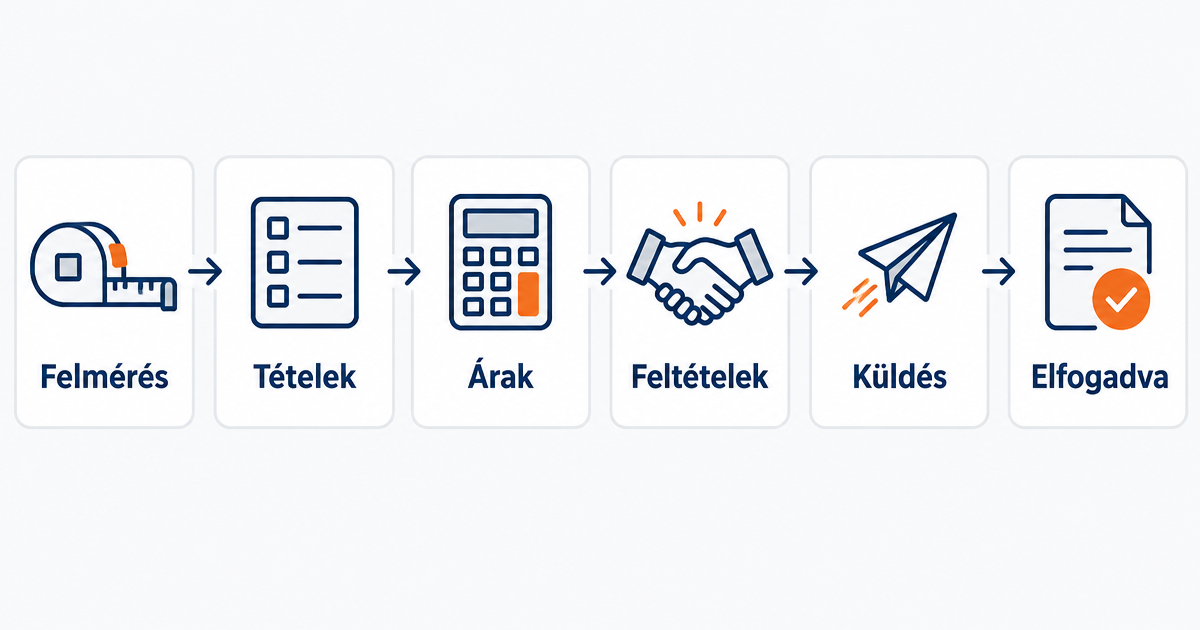
How do I write a quote? Step by step, with a filled-in example
Writing a quote step by step: what it should include, what's mandatory, how to price items, what to put in the terms and the validity period. With a filled-in example.
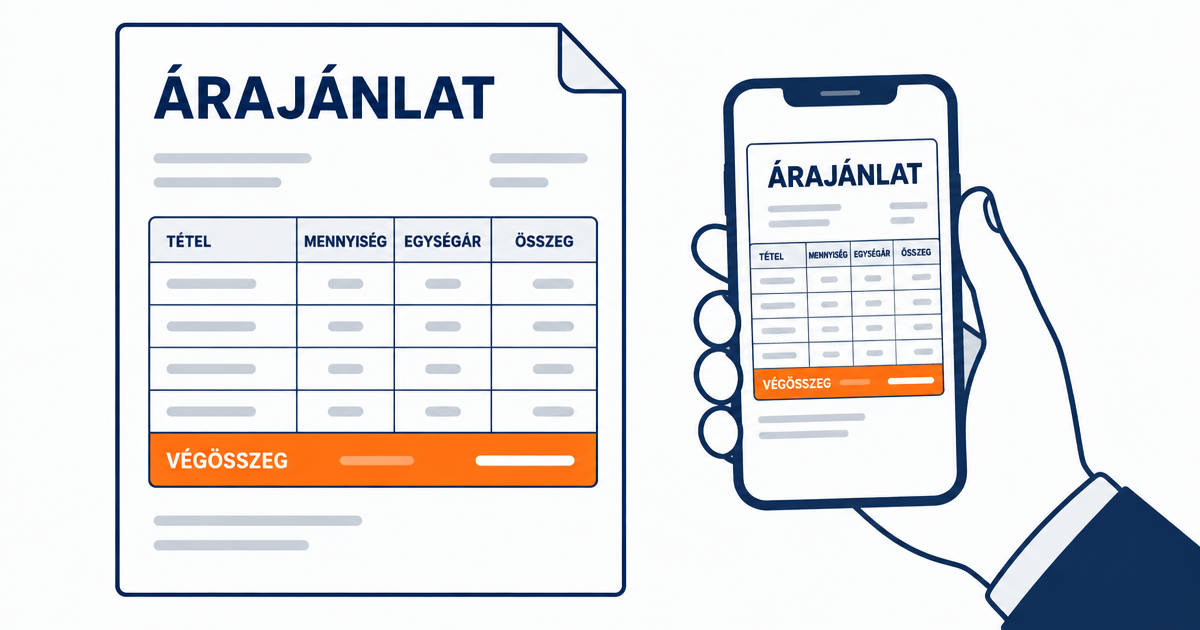
Quote template 2026: a filled-in example and downloadable template (Word, Excel, PDF)
Free quote template for Hungarian tradespeople: a filled-in example with line items, downloadable Word, Excel and PDF templates, and the most common mistakes tradespeople make.
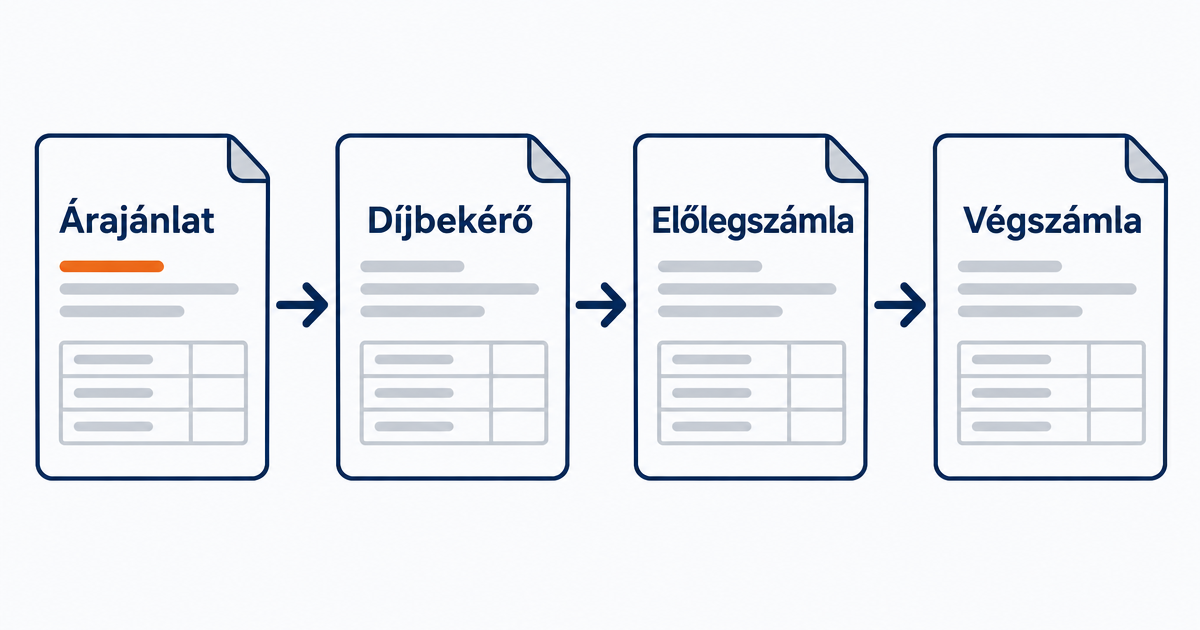
Quote, payment request, deposit invoice, final invoice: what's the difference, and when do you need which?
Quote, payment request (pro forma), deposit invoice and final invoice: which is needed when, which carries VAT and Hungarian tax authority obligations, and in what order to issue them. Simply explained, for tradespeople.
Construction quote template: an itemised example for contractors, and what to watch for with reverse-charge VAT
Construction quote template for contractors: itemised breakdown of materials and labour, terms, warranty, reverse-charge VAT. Filled-in example and downloadable template.