
How do I write a quote? Step by step, with a filled-in example
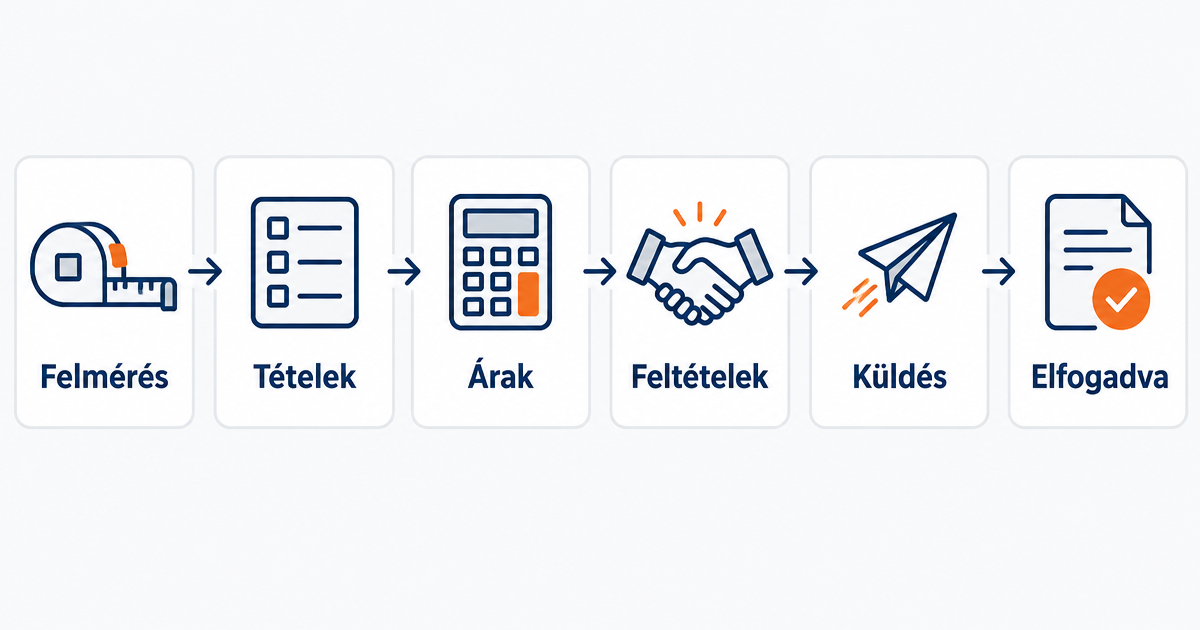
A quote isn't just a number on paper, it's the document that decides whether you get the job, and whether you end up arguing about it afterwards. This guide walks you through the process from the survey to sending it. If you just need a ready-made template, you'll find it on the quote template page.
1. Survey accurately before quoting a price
Most bad quotes go wrong not at the pricing stage, but at the survey. Go out, measure, take photos, and note what the client says versus what you actually see. The two are often different: "just a bit of painting" can turn out to be 60 m² of wall skimming in reality.
If you can't visit in person, you can quote based on the client's own information, but then state: "This quote is based on quantities provided by the client, and may change after an on-site survey." Without this, the price you quote is binding on you.
2. Break the job into line items
A line item is something the client can decide on separately: want it or not, this much or that much. An item consists of four things: description, quantity, unit, unit price. The total follows from these.
Good item: "Skimming walls in 2 coats, with sanding, 62 m², HUF 3,200/m²". Bad item: "Wall preparation, HUF 200,000".
If you're also supplying the materials, list them as a separate item or block. That way, if the client wants to buy them themselves, you remove one line instead of rewriting the whole quote. More on this: Labour and materials in a quote.
3. Price it so you don't have to explain yourself later
Build into the unit price everything that belongs to that item: moving materials, covering surfaces, final clean-up. Anything you don't include should either be a separate line item or listed under "not included".
The most commonly forgotten costs: travel to site, removing rubble, parking, handling demolished materials, ladders or scaffolding, unexpected subfloor conditions.
4. State clearly what's not included
This is the part that protects you from most disputes. The client assumes that "bathroom tiling" includes the tiles, removing rubble and demolition. If it doesn't, state it clearly:
"The price excludes: tiles, removal of rubble, removal and reinstallation of sanitary fittings."
5. State a validity period and terms
Validity. Always a specific date. If you don't state one, the Hungarian Civil Code decides for you: between parties not present together, the binding offer lasts as long as a response could "reasonably" be expected, which is uncertain in a dispute. In practice, 15 to 30 days is typical. More: How long is a quote valid?
Start and duration. "Start within 2 weeks of acceptance, expected duration 5 working days."
Payment. Deposit amount and timing, when the balance is due. The right way to request a deposit is with a payment request, and once the deposit arrives you must issue an invoice for it.
Warranty. On what, and for how long.
Extra work. How you'll handle anything that comes up along the way: "after prior agreement, at the unit prices in this quote."
6. State VAT correctly
If you're VAT-registered: net, VAT, gross in separate lines. If you're VAT-exempt (in 2026, available up to HUF 20 million in annual revenue): a single total, with a note that you're not charging VAT. For construction work with a corporate client, reverse-charge VAT may apply, which we covered in the labour-materials-VAT article.
7. What a finished quote should look like
Header: your details (name or company name, address, tax number, contact) and the client's details. Identifiers: quote number, date, validity. Description of the job: 2-3 sentences, referencing the survey date. Itemised table: labour and materials separate, with totals. Not included: a list. Terms: start, duration, payment, warranty, extra work. VAT note: if you're VAT-exempt or reverse charge applies. Acceptance: a place for a signature, or an online button.
You'll find a filled-in example with line items on the quote template page, and a construction version at the construction quote template.
8. Send it quickly, and in a form that can't be altered
Two things matter when sending it. One is speed: whoever sends their quote two days later often finds the client has already chosen someone else. The other is format: don't send a Word file, as it can be altered, send a PDF or a protected link that the client can accept but not change.
After sending, note when you should follow up. A polite "Did you get a chance to look at the quote?" message after 3 to 4 days can save a lot of work.
What does the law say about quotes?
Unlike an invoice, whose content is set out in Hungarian VAT law, a quote has no legally prescribed format. Under the Hungarian Civil Code (Section 6:64), a person who makes a clear statement aimed at concluding a contract, covering the essential matters, remains bound by it: this is the binding nature of an offer. If the client accepts your quote, a contract is formed with the content of the quote.
Two practical things follow from this. If you don't want to be bound, state that the quote is for information only and given without binding commitment; such a statement doesn't legally count as an offer. And if you're taking on construction work, alongside the accepted quote it's worth also entering into a written construction contract under decree 191/2009, as it sets out mandatory content.
Instead of a quote template, just say it out loud
For anyone giving several quotes a week, steps 2 to 7 above repeat every single time: company details, line items, prices, terms, PDF. Ajánlatra asks for this once, after that you just say the job out loud ("sixty-two square metres of wall skimming in two coats, three thousand two hundred forints per square metre"), and the itemised, branded quote is ready, with validity, VAT and an accept button. The client receives it by link, PDF, or on site via QR code, and you can see when they opened it and when they accepted it.
3 quotes a month free, no card or installation required. You can try it on the homepage without registering.
Frequently asked questions
What is a quote's mandatory content?
The law doesn't prescribe mandatory content for a quote (it does for an invoice). Under Hungarian civil law, however, a statement counts as an offer if it clearly shows intent to contract and covers the essential terms, so at minimum it needs to state who, for whom, what, for how much and until when.
What's the difference between a quote and a cost estimate?
A quote is binding: if the client accepts it, a contract is formed at the stated price. A cost estimate or indicative price is only a guide. If you don't want to be bound, state that the quote is for information only and given without binding commitment.
Can I give a quote without a survey?
You can, but only with conditions: state that the quote is based on the quantities provided by the client, and may change after an on-site survey. Without this, the price you quote is binding on you.
How many line items should a quote have?
As many as the client can decide on or leave out individually. For a bathroom renovation, 6 to 12 items is typical. A single lump sum is too little, and 40 tiny line items becomes unreadable.
Related articles
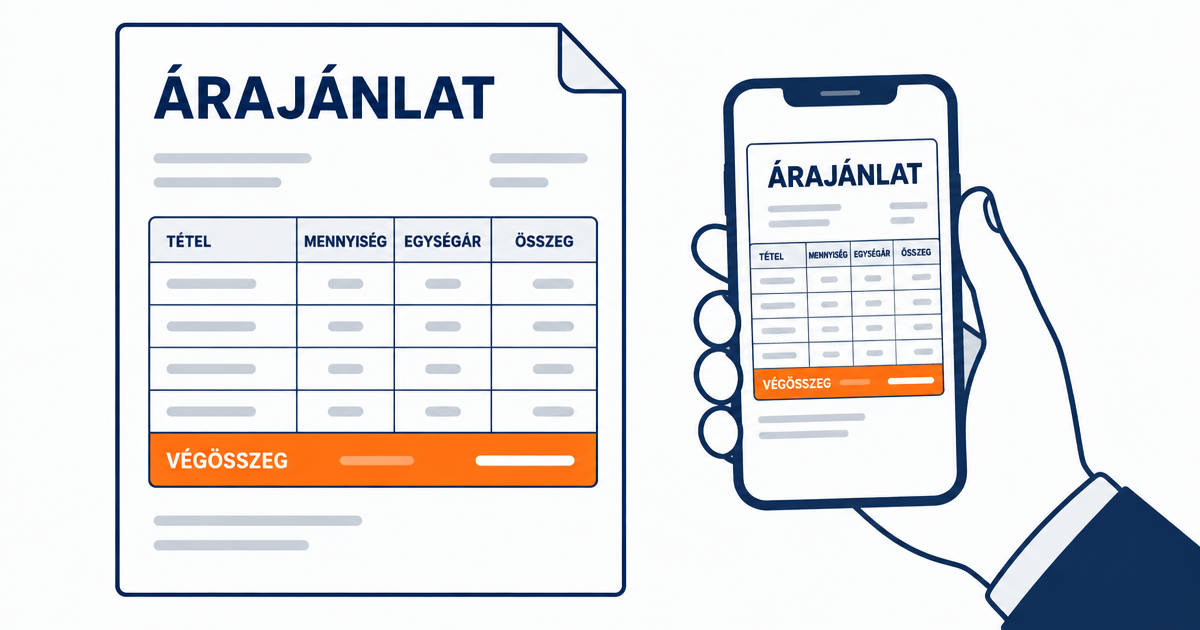
Quote template 2026: a filled-in example and downloadable template (Word, Excel, PDF)
Free quote template for Hungarian tradespeople: a filled-in example with line items, downloadable Word, Excel and PDF templates, and the most common mistakes tradespeople make.

How long is a quote valid? Being bound by an offer, explained simply for tradespeople
How long is a quote valid if you didn't put a date on it? When can you withdraw it? What does Hungarian civil law say about being bound by an offer? Explained simply, with examples, for tradespeople.
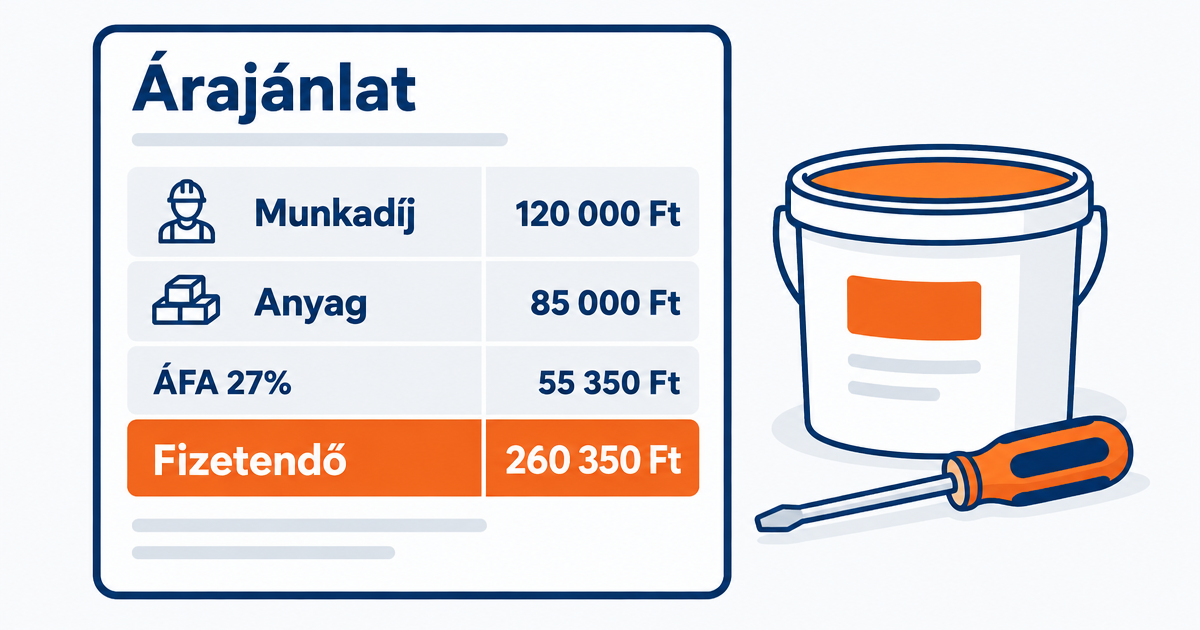
Labour, materials and VAT in a quote: how to break it down so there's no dispute
How to show labour and materials costs in a quote, when to list them separately, and how VAT, Hungarian small business VAT exemption and reverse-charge VAT fit in. With an example.
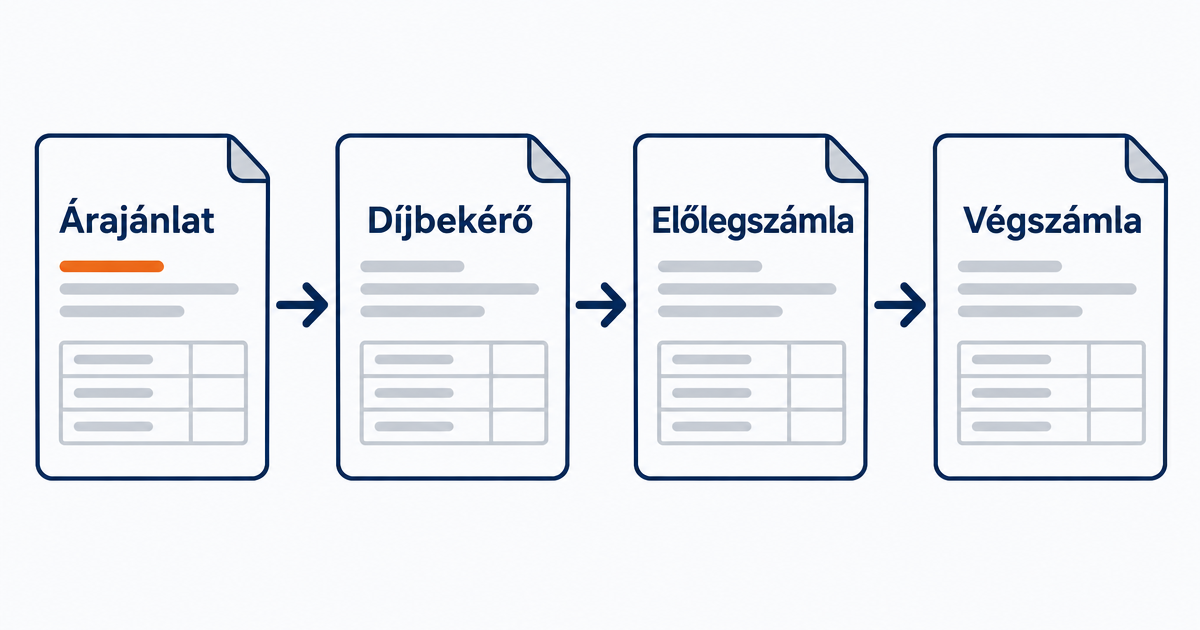
Quote, payment request, deposit invoice, final invoice: what's the difference, and when do you need which?
Quote, payment request (pro forma), deposit invoice and final invoice: which is needed when, which carries VAT and Hungarian tax authority obligations, and in what order to issue them. Simply explained, for tradespeople.