
Labour, materials and VAT in a quote: how to break it down so there's no dispute
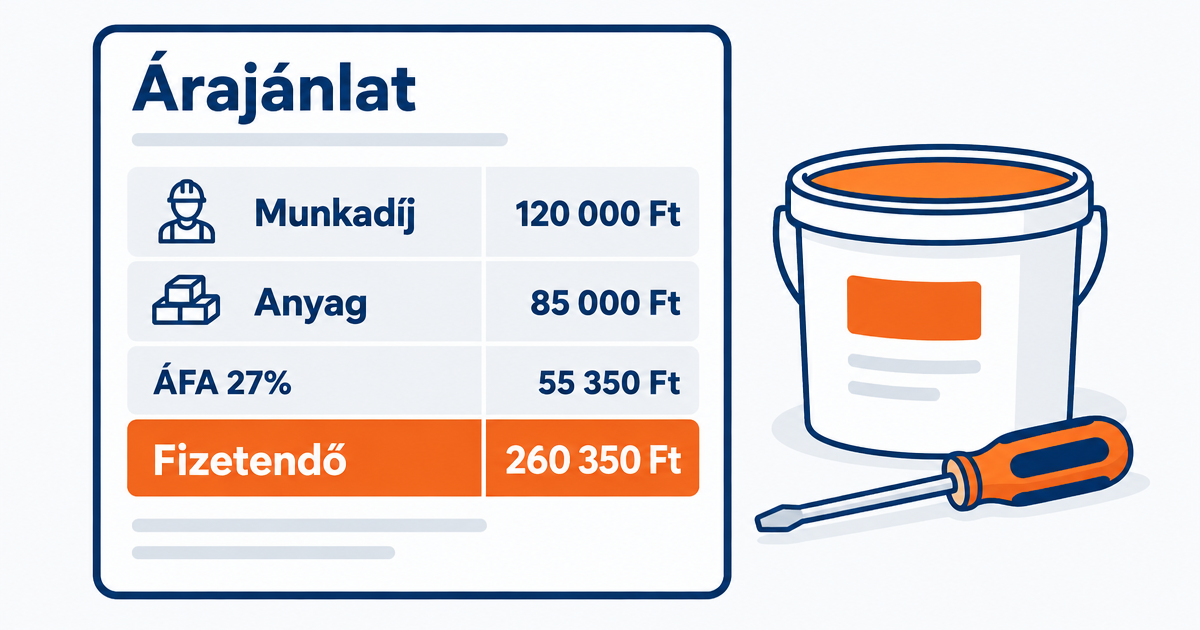
In most quotes, the dispute isn't about the final figure, it's about what's included in it. "Was the paint included?" "Did the material price change, not the labour?" "Why did it go up by 27%?" This article is about how to break down a quote so these questions never come up.
Why split labour and materials?
Four practical reasons:
- The client often buys the materials themselves. If it's a separate block, you strike out one line rather than rewriting the whole quote.
- Materials prices change, labour doesn't. If weeks pass between the quote and the work, you only need to update the materials line, and the client sees that you're not the one hiking the price.
- It's transparent for extra work. If, after demolition, more adjustment is needed, a line gets added to labour, and another to materials.
- It matters for some grants and for VAT treatment. Several Hungarian home renovation grant schemes required materials and labour costs to be shown separately, and the VAT treatment can also differ between installed materials and separately sold goods.
Three ways to show materials
1. Materials as a separate, itemised line. "Adhesive 25 kg, 6 bags, HUF 4,800/bag." This is the most transparent, but the longest, and the client starts checking prices at the local DIY store.
2. Materials as a package. "Materials: adhesive, grout, waterproofing, edge trim, HUF 86,000." One line, clear, and you don't need to justify every bag. Best for smaller jobs.
3. Materials built into the unit price. "Tiling including materials, HUF 14,000/m²." Short, but if the client brings their own adhesive, you'll need to recalculate.
Our advice: labour always itemised, materials either as a package or itemised, depending on the size of the job. Build materials into the unit price only if you never supply materials separately anyway.
What does the labour charge cover?
Many tradespeople never write this down, then end up arguing about it. Either build it into the labour unit price, or list it as a separate line:
- travel to site, parking
- moving materials from depot to site and up to the floor
- covering and protecting surfaces
- daily and final clean-up
- bagging rubble (removal is often separate)
- tools, machinery, scaffolding
Whatever you don't put in the unit price or as a separate line, the client will assume is "included". That's why a quote has a "not included" section; you can see what that looks like on a finished quote in the How do I write a quote? article and the construction template.
VAT on the quote: three scenarios
1. You're VAT-registered, working for a private individual
Net, VAT, and gross shown on separate lines. The private individual looks at the gross figure, so that should be in the biggest type. If you only show the net amount, with the 27% appearing at the end, the client feels misled, even if it's legally fine.
2. You're exempt from VAT as a small business
There's a single total, with one sentence underneath: "I'm a VAT-exempt small business, the amount doesn't include VAT, and I won't be charging any." In 2026, the Hungarian small business VAT exemption can be chosen up to HUF 20 million in annual revenue (HUF 22 million in 2027, HUF 24 million in 2028), so a significant share of tradespeople fall into this category. Without that sentence, the client may think a further 27% is coming, and see you as pricier than you are.
We've also prepared a separate template for sole traders: quote template for sole traders. One thing to watch for: if you cross the threshold during the year, VAT must be charged on the transaction that takes you over it, on the full invoice amount. If your quote stays valid for a long time and you're close to the threshold, check with your accountant.
3. You're VAT-registered, doing construction work for a corporate client
This is where reverse-charge VAT can come in. Under Section 142(1)(b) of the Hungarian VAT Act, reverse charging applies to construction, installation and other assembly work aimed at creating, extending, altering or otherwise modifying, or demolishing, a property, and subject to official permit or notification; under NAV's 2026/4 tax guidance, the permit itself doesn't need to relate to construction work. Both parties must also be VAT-registered domestic businesses.
In practice:
- Private individual client → standard VAT, always.
- Company, a project subject to permit or notification, you're doing installation work → typically reverse-charged: the quote shows the net amount, with a note that the client pays the VAT.
- Company, work not subject to permit (e.g. painting, floor replacement) → standard VAT.
Always write on the quote which basis you've calculated on, for example: "VAT will be charged based on the client's declaration, depending on whether the project is subject to a permit." That way, if it turns out after acceptance that the other scenario applies, your quote isn't the one at fault.
Example: the same job, three ways
Laying 24 m² of laminate flooring, materials excluded, HUF 4,500/m² labour, plus HUF 38,000 for additional materials (underlay, skirting board, adhesive).
| Labour | Materials | Net | VAT | Payable | |
|---|---|---|---|---|---|
| VAT-registered, private client | HUF 108,000 | HUF 38,000 | HUF 146,000 | HUF 39,420 | HUF 185,420 |
| VAT-exempt small business | HUF 108,000 | HUF 38,000 | – | – | HUF 146,000 (excludes VAT) |
| VAT-registered, corporate client, reverse charge | HUF 108,000 | HUF 38,000 | HUF 146,000 | paid by the client | HUF 146,000 + VAT paid by the client |
The same job, three different final figures in the client's eyes. That's why a single number isn't enough. We've written about the steps after acceptance (payment request, deposit invoice, final invoice) here.
Pre-costing: work it out before you quote
You shouldn't be making up your labour unit prices while writing the quote. Work it out once: what's your daily cost (wages or drawings, vehicle, tools, insurance, tax), how many productive hours do you have in a day (not eight, more like five or six), and from that, what's your hourly rate, which you then apply per square metre or per piece. Once you've done this, writing a quote becomes quantity × unit price, not a renegotiation with yourself every time.
Automatic breakdown, dictated
Ajánlatra sorts dictated line items into materials and labour, and calculates VAT according to your settings: 27%, 5% or VAT-exempt, with the total always shown gross as well. You save your frequent items as templates with your own prices, so the unit price isn't decided while you're writing the quote. On the Pro plan you can also import your existing price list from Excel, PDF or even a photographed sheet of paper.
3 quotes a month free, try it on the homepage without registering.
This article is general information, not tax advice. How VAT applies depends on the specific transaction, discuss it with your accountant.
Frequently asked questions
Is it mandatory to list labour and materials separately?
Not on a quote, but it's strongly recommended: if the client buys materials themselves, or the job grows, you'll know which part changed. For some grant schemes, and for how reverse-charge VAT applies, what counts as materials versus labour also matters.
Does the same VAT rate apply to materials and labour?
If you supply the materials as part of a complex service (you install them yourself), this typically follows the tax treatment of the service, meaning a single VAT rate applies. If you sell the materials separately, that's a supply of goods, with its own rules. If in doubt, ask your accountant.
What should I write on the quote if I'm exempt from VAT as a small business?
A single total, and one sentence: "I'm a VAT-exempt small business, the amount doesn't include VAT, and I won't be charging any." In 2026, the Hungarian small business VAT exemption can be chosen up to HUF 20 million in annual revenue.
When is VAT reverse-charged on a construction quote?
When the work is construction or installation in nature, aimed at creating, extending, altering or demolishing a property, is subject to official permit or notification, and both parties are VAT-registered businesses. For a private individual client, it's never reverse-charged.
Related articles
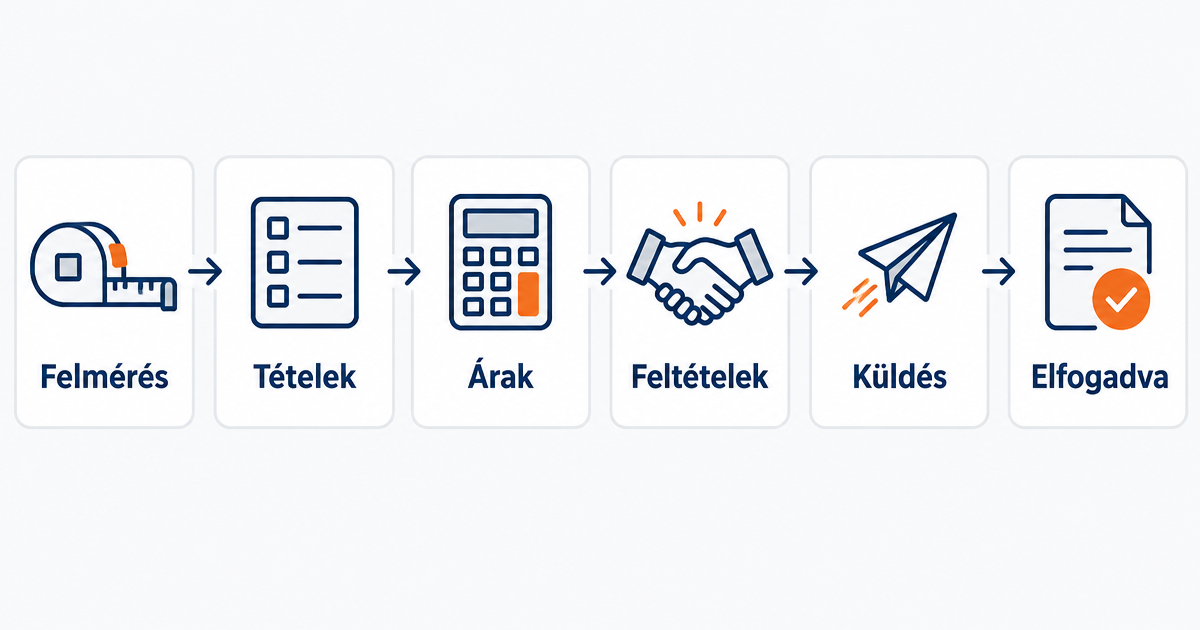
How do I write a quote? Step by step, with a filled-in example
Writing a quote step by step: what it should include, what's mandatory, how to price items, what to put in the terms and the validity period. With a filled-in example.

Construction quote template: an itemised example for contractors, and what to watch for with reverse-charge VAT
Construction quote template for contractors: itemised breakdown of materials and labour, terms, warranty, reverse-charge VAT. Filled-in example and downloadable template.
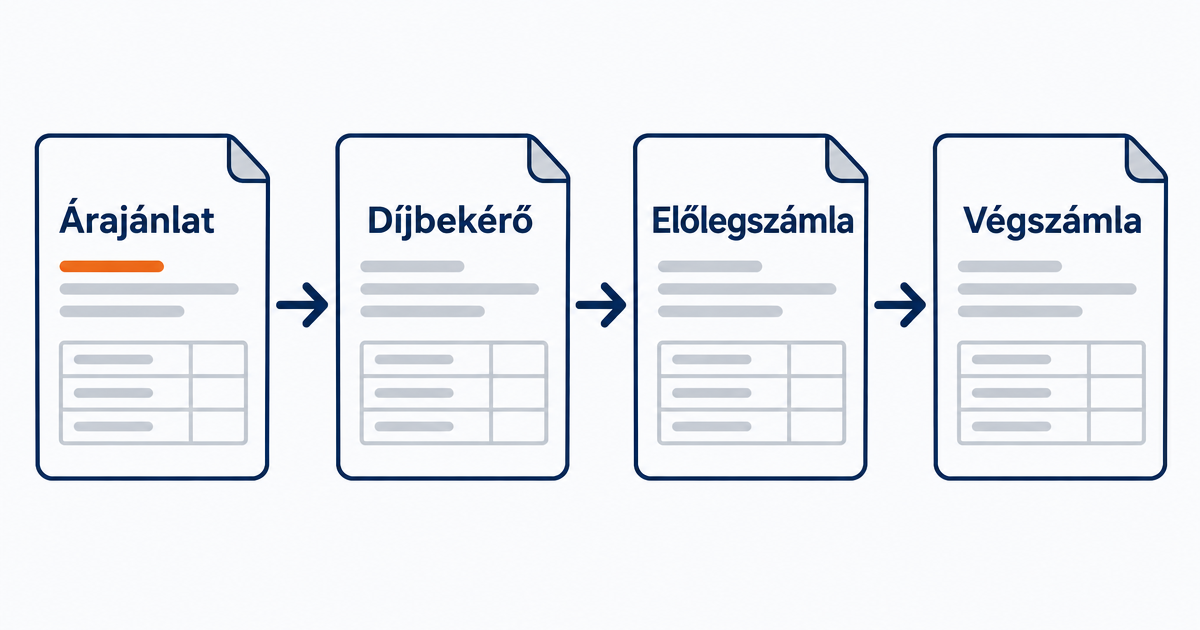
Quote, payment request, deposit invoice, final invoice: what's the difference, and when do you need which?
Quote, payment request (pro forma), deposit invoice and final invoice: which is needed when, which carries VAT and Hungarian tax authority obligations, and in what order to issue them. Simply explained, for tradespeople.

Quote template for sole traders: what to include, and what to write about VAT
Sole trader quote template: which details are mandatory, how to mark VAT exemption, and a filled-in example you can use right away.