
Quote, payment request, deposit invoice, final invoice: what's the difference, and when do you need which?
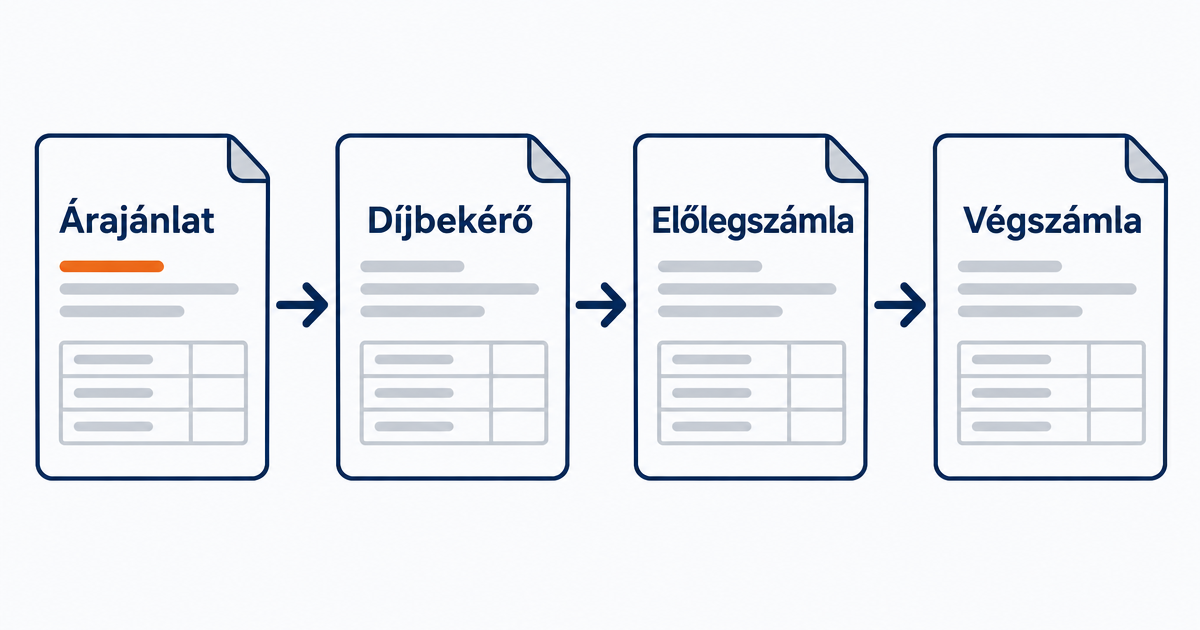
Over the course of a job, typically four documents get produced, and a good number of tradespeople aren't entirely sure what each one means. But the difference isn't just naming: one triggers a VAT payment and the other doesn't, one must be reported to the Hungarian tax authority (NAV) and the other doesn't. Let's go through them in order.
The four documents in one sentence each
| Document | When it's created | What it's for | VAT liability | NAV Online Invoice |
|---|---|---|---|---|
| Quote | Before the job | Fixing the price and terms; accepting it creates a contract | None | Not required |
| Payment request (pro forma) | After acceptance, before payment | Requesting a deposit or fee without yet having a document | None | Not required |
| Deposit invoice | When the deposit arrives | The document for the deposit received | Yes, on receipt | Required |
| Final invoice | After completion | Settling the job, with the deposit deducted | Yes | Required |
Quote: fixing the deal
A quote isn't an accounting document, it's a legal statement. You describe what, for how much and on what terms you're taking on the job; if the client accepts it, a contract is formed under Hungarian civil law. It carries no VAT, doesn't need to be booked, and doesn't need to be reported. There's no prescribed format, but there is content worth following: that's covered in How do I write a quote?, and you'll find a filled-in example on the quote template page.
Something to watch for: a quote isn't a "pro forma invoice". The two are often confused, but a pro forma is the international name for a payment request, in other words a request for payment, not an offer.
Payment request: asking for payment, without a document
The client has accepted the quote, and you've asked for a 30% deposit. How do you request it? With a payment request. A payment request (also known as a pro forma invoice or payment notice) is a request for payment showing the amount, bank account number, payment deadline, and what it relates to.
The key reason to use one: a payment request isn't an accounting document, it doesn't trigger a VAT liability, and it doesn't need to be submitted to the NAV Online Invoice system. If the client ultimately doesn't pay, there's nothing for you to do: no cancellation needed, since there was no document. If they do pay, the next step follows.
What should it say? Clearly, "Payment request", never "invoice". It's worth noting that it doesn't entitle the recipient to reclaim VAT, and that the invoice will be issued once payment is received.
Deposit invoice: the money has arrived, now you need the document
When the deposit lands in your account, Section 59 of the Hungarian VAT Act requires you to issue an invoice for it, and this creates a VAT liability: the deposit counts as a gross amount, meaning it includes VAT. This is the deposit invoice. So a payment request doesn't replace the deposit invoice, it just precedes it.
Two important details:
- A deposit is an amount received before completion, under the contract, counted towards the price. If the client transfers money early on their own initiative, without being asked, this may be treated differently for tax purposes; check with your accountant in that case.
- As a VAT-exempt small business, you have no VAT to charge, but the obligation to issue a document still applies: a deposit still requires an invoice in that case too.
Final invoice: settling up at the end of the job
After completion, you issue the final invoice, listing all items, with the deposit deducted as a negative line. The difference is the amount still due. The final invoice is subject to the mandatory content rules for invoices, and must be submitted to the NAV Online Invoice system, just like the deposit invoice.
The correct order for a construction job
- Survey → quote. Itemised, with validity and terms. (Construction template)
- Acceptance. The client signs or accepts online. For larger jobs, also a written construction contract.
- Payment request for the deposit. For the percentage set out in the quote, with a payment deadline.
- Deposit arrives → deposit invoice. Dated on the day it's received.
- Completion → final invoice. With the deposit deducted.
If the client doesn't pay the payment request, steps 4 to 5 simply don't happen, with no administrative consequences. This is the point where many tradespeople unnecessarily issue a deposit invoice before payment, and then have to cancel it.
Common mistakes
Writing "invoice" on a payment request. This turns it into an accounting document, with VAT and reporting obligations. The payment request should always say "Payment request".
A deposit invoice before the money has arrived. The deposit invoice's completion date is the day the money arrives; if you issue it in advance, you'll be declaring VAT with the wrong date.
The quote number doesn't appear on the payment request. Reference it ("30% deposit for quote no. AJ-2026-0042"), so both the client and your accountant know what it relates to.
A final invoice without deducting the deposit. This means you're invoicing the same amount twice.
What does Ajánlatra handle, and what doesn't it?
Ajánlatra is built for the first step: you create the itemised, branded quote by voice, the client accepts it online, and you can see when they opened it. You issue the payment request, deposit invoice and final invoice in your invoicing software (such as Billingo or Számlázz.hu), simply copying over the items from the accepted quote. That way, every figure you'll later need for the invoice is already there on the quote.
3 quotes a month free, try it on the homepage without registering.
This article is general information, not tax advice. Discuss your own situation with your accountant.
Frequently asked questions
Is a payment request an invoice?
No. A payment request (also called a pro forma, "díjbekérő" in Hungarian) is just a request for payment: it's not an accounting document, it doesn't trigger a VAT liability, and it doesn't need to be submitted to the NAV Online Invoice system. Once the client has paid, you must issue an invoice (a deposit invoice or final invoice) for it.
Do I need to issue a deposit invoice if I've received a deposit?
Yes. Any amount received before completion, counted towards the price, is a deposit, for which Section 59 of the Hungarian VAT Act requires an invoice to be issued, and a VAT liability arises when the money is received. The deposit is treated as a gross amount, meaning it includes VAT.
If the client doesn't pay the payment request, do I need to cancel it?
No. Since a payment request isn't an accounting document, there's nothing to cancel; it simply never becomes an invoice. This is the biggest advantage of a payment request over a deposit invoice.
Does the quote replace the contract?
Legally, yes, an accepted quote creates a contract under Hungarian civil law. For larger jobs, especially in construction, it's still worth drawing up a written contract, because construction contracts are subject to separate mandatory legal content.
Related articles
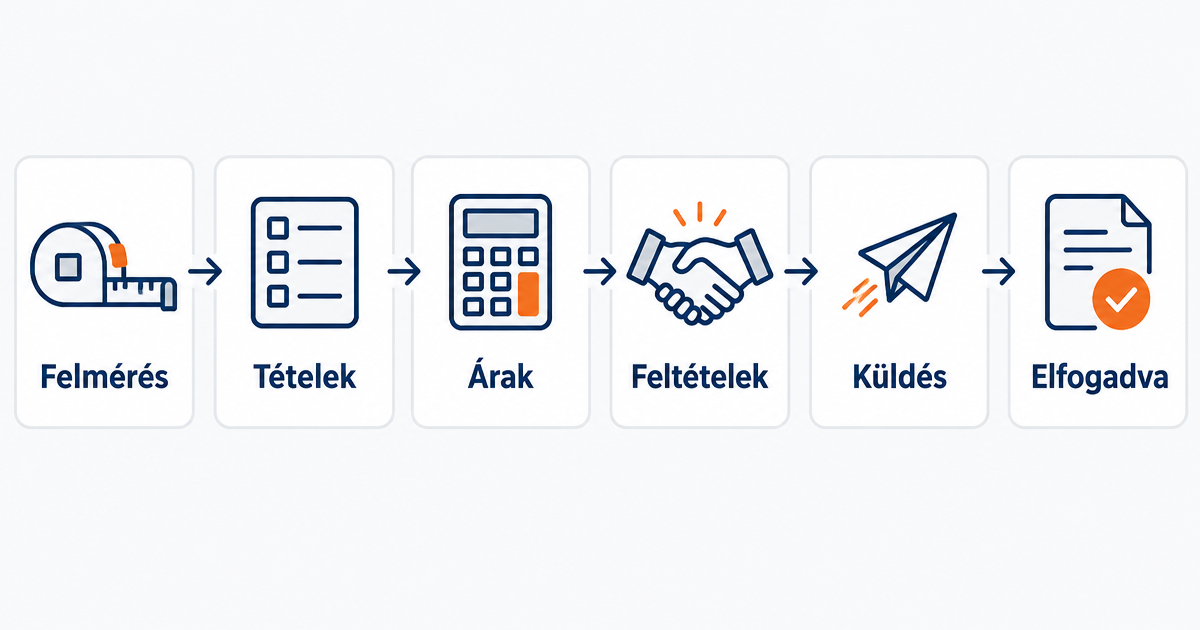
How do I write a quote? Step by step, with a filled-in example
Writing a quote step by step: what it should include, what's mandatory, how to price items, what to put in the terms and the validity period. With a filled-in example.
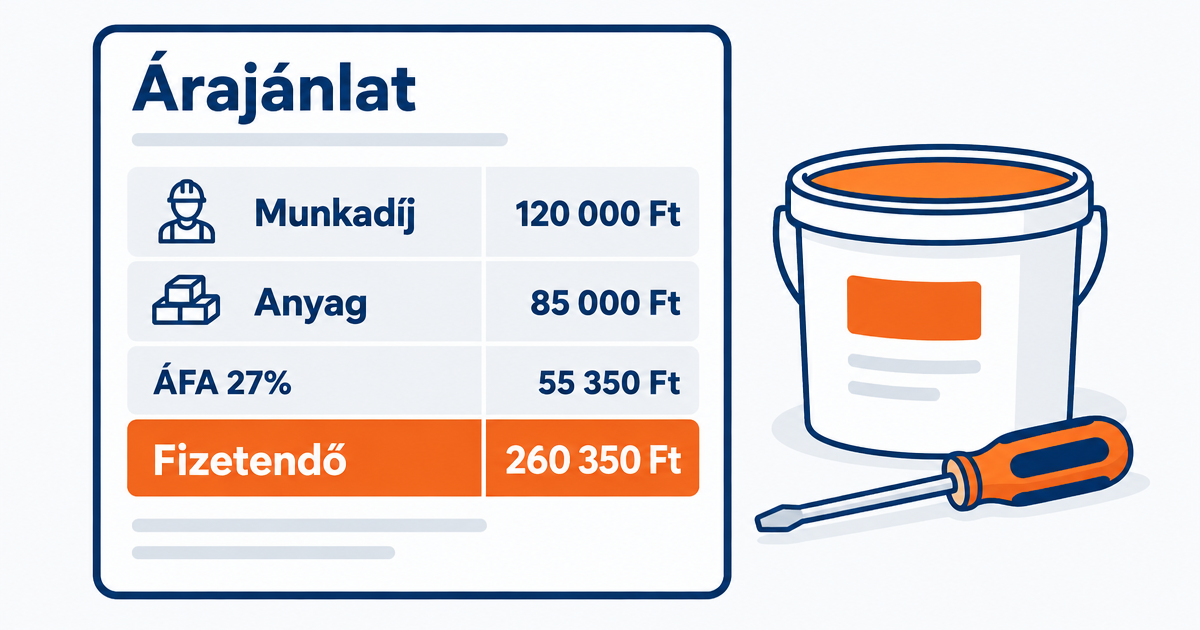
Labour, materials and VAT in a quote: how to break it down so there's no dispute
How to show labour and materials costs in a quote, when to list them separately, and how VAT, Hungarian small business VAT exemption and reverse-charge VAT fit in. With an example.

Quote template for sole traders: what to include, and what to write about VAT
Sole trader quote template: which details are mandatory, how to mark VAT exemption, and a filled-in example you can use right away.
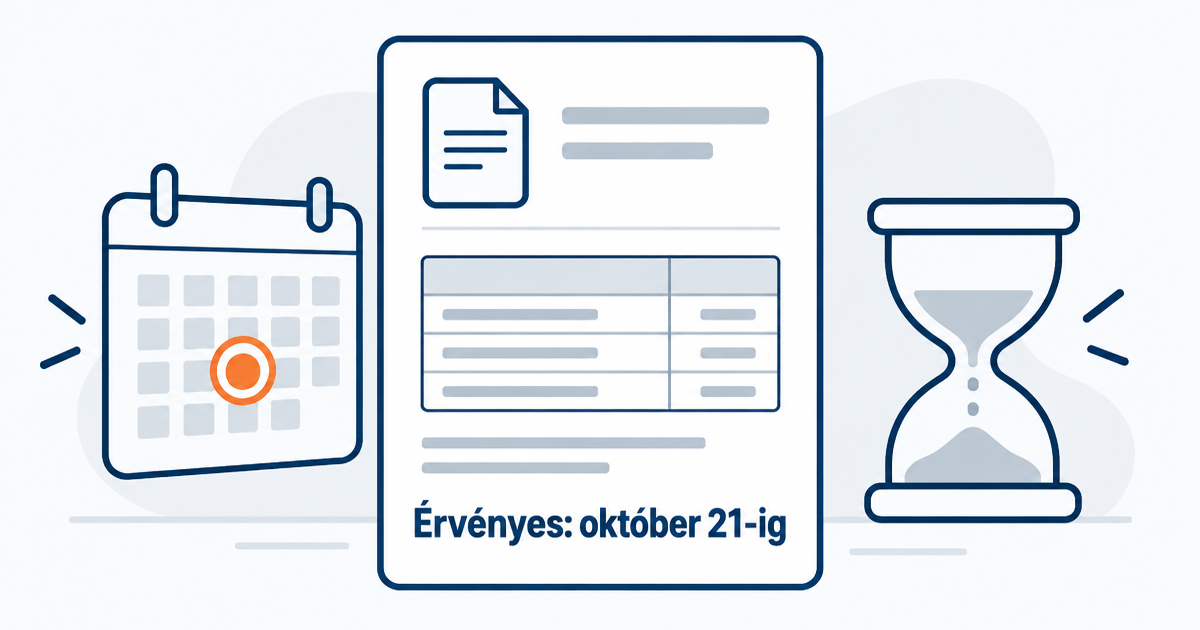
How long is a quote valid? Being bound by an offer, explained simply for tradespeople
How long is a quote valid if you didn't put a date on it? When can you withdraw it? What does Hungarian civil law say about being bound by an offer? Explained simply, with examples, for tradespeople.